Choosing between Nylon vs Polyester vs Spandex for yoga wear is one of the most important decisions isn’t just about picking a material that sounds good on a label. The fabric you select directly impacts how your customers experience your brand—whether they come back for a second purchase or never wear your product again.
For yoga apparel, three fabrics dominate the conversation: Nylon, Polyester, and Spandex. Each has distinct strengths and trade-offs. Understanding them is the first step in making a confident sourcing decision for your brand.This guide breaks down the nylon vs polyester vs spandex for yoga wear debate to help you make the right sourcing decision.
This guide breaks down the nylon vs polyester vs spandex debate — and also touches on the nylon vs spandex comparison for yoga wear applications.
Why Fabric Choice Matters for Yoga Wear
Yoga is not one activity. It ranges from slow, meditative Hatha to sweat-drenching Hot Yoga and power Vinyasa flows. Each practice places different demands on the clothing:
- Hot Yoga / Bikram Yoga: Requires maximum moisture-wicking and breathability. Sweat management is non-negotiable.
- Vinyasa / Power Yoga: Demands 4-way stretch and durability. Fabrics must move with the body through dynamic transitions.
- Restorative / Hatha Yoga: Prioritizes comfort, softness, and a smooth feel against the skin.
The wrong fabric can lead to:
- Discomfort: Chafing, overheating, or feeling weighed down by sweat
- Poor Durability: Pilling, losing shape, or fading after a few washes
- Brand Damage: A single bad experience can lose a customer forever
B2B brands that understand fabric science don’t just sell products—they solve problems for their end customers and build lasting trust with their retail partners.For a broader introduction to yoga wear fabric properties, check out our Yoga Wear Fabric Guide.
Nylon — The Durability Champion
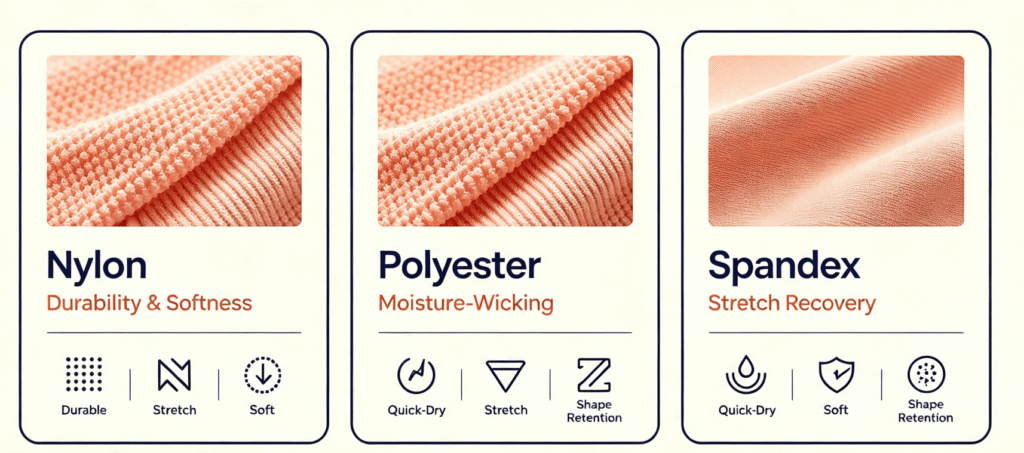
Nylon (Polyamide) is a synthetic fabric prized for its exceptional strength and abrasion resistance. It’s the go-to choice for yoga pants, leggings, and performance wear that needs to withstand frequent use and washing.
Key Properties:
| Property | Performance |
|---|---|
| Durability | Excellent. Resists pilling, tears, and abrasion better than most synthetics. |
| Elasticity | Very good. Holds shape well over time. |
| Moisture Management | Moderate. Absorbs more moisture than polyester but dries more slowly. |
| Softness | Smooth and comfortable against the skin. |
| UV Resistance | Good. Can be engineered for UV protection (UPF). |
| Care | Easy to wash, quick to dry. Resists shrinking and wrinkling. |
Best Applications in Yoga Wear:
- Yoga leggings and pants
- High-wear areas like knees and seat
- Compression wear
- Travel yoga apparel (durable and wrinkle-resistant)
Why Brands Choose Nylon:
It’s the fabric of choice for brands that prioritize longevity. A nylon-based legging can survive hundreds of washes and still retain its shape and color. For premium or performance-focused yoga lines, nylon is often the backbone.
Polyester — The Moisture-Wicking Workhorse
Polyester is the most widely used synthetic fabric in activewear—and for good reason. It’s the undisputed champion of moisture management. Unlike nylon, polyester is hydrophobic: it doesn’t absorb water, but pushes sweat to the surface where it can evaporate quickly.
Key Properties:
| Property | Performance |
|---|---|
| Durability | Very good. Resists stretching, shrinking, and wrinkles. |
| Elasticity | Moderate. Less naturally elastic than nylon, often blended with spandex. |
| Moisture Management | Excellent. Quick-drying and highly breathable. |
| Softness | Can feel slightly less soft than nylon, but treatments can improve hand-feel. |
| UV Resistance | Good. Often used in UV-protection apparel. |
| Care | Very easy. Resists stains, dries fast, holds color well. |
Best Applications in Yoga Wear:
- Hot yoga tops and tanks
- High-sweat styles
- Lightweight performance tees
- Colorful or printed designs (polyester holds dye exceptionally well)
Why Brands Choose Polyester:
Polyester is the practical choice for high-output practices. It keeps the wearer dry and cool when temperatures rise. For brands targeting the hot yoga market, polyester-based blends are a must.
Polyester — The Moisture-Wicking Workhorse
Polyester is the most widely used synthetic fabric in activewear—and for good reason. It’s the undisputed champion of moisture management. Unlike nylon, polyester is hydrophobic: it doesn’t absorb water, but pushes sweat to the surface where it can evaporate quickly.
Key Properties:
| Property | Performance |
|---|---|
| Durability | Very good. Resists stretching, shrinking, and wrinkles. |
| Elasticity | Moderate. Less naturally elastic than nylon, often blended with spandex. |
| Moisture Management | Excellent. Quick-drying and highly breathable. |
| Softness | Can feel slightly less soft than nylon, but treatments can improve hand-feel. |
| UV Resistance | Good. Often used in UV-protection apparel. |
| Care | Very easy. Resists stains, dries fast, holds color well. |
Best Applications in Yoga Wear:
- Hot yoga tops and tanks
- High-sweat styles
- Lightweight performance tees
- Colorful or printed designs (polyester holds dye exceptionally well)
Why Brands Choose Polyester:
Polyester is the practical choice for high-output practices. It keeps the wearer dry and cool when temperatures rise. For brands targeting the hot yoga market, polyester-based blends are a must.
Spandex — The Stretch That Moves With You
Spandex (also known as Elastane or Lycra) is never used alone—it’s always blended with other fibers. Its superpower is extreme elasticity: it can stretch up to 5-7 times its original length and return to shape.
Key Properties:
| Property | Performance |
|---|---|
| Elasticity | Exceptional. 5-7x stretch capacity with full recovery. |
| Durability | Good, but requires blending to maintain structure. |
| Moisture Management | Low. It retains moisture and doesn’t wick well on its own. |
| Softness | Smooth and comfortable. |
| UV Resistance | Low, but not an issue when used as a blend. |
| Care | Requires gentle care; heat and chlorine can degrade the fibers over time. |
Best Applications in Yoga Wear:
- As a blend component in nearly all stretch yoga apparel (leggings, tops, bodysuits)
- High-motion areas requiring extreme flexibility
- Compression and shapewear
Why Brands Choose Spandex:
Spandex is what makes yoga wear move with the body. It eliminates restriction and provides the “second skin” feel that yogis love. Without spandex, even the best nylon or polyester would feel stiff and restrictive.
Comparison Table: Nylon vs Polyester vs Spandex for Yoga Wear
For a quick reference, here’s how nylon vs polyester vs spandex compare — and specifically, how nylon vs spandex perform for yoga wear.
| Factor | Nylon | Polyester | Spandex |
|---|---|---|---|
| Durability | ⭐⭐⭐⭐⭐ Excellent | ⭐⭐⭐⭐ Very Good | ⭐⭐⭐ Good (as blend) |
| Abrasion Resistance | ⭐⭐⭐⭐⭐ Best | ⭐⭐⭐⭐ Good | ⭐⭐⭐ Moderate |
| Moisture-Wicking | ⭐⭐⭐ Good | ⭐⭐⭐⭐⭐ Excellent | ⭐⭐ Low |
| Drying Speed | ⭐⭐⭐ Moderate | ⭐⭐⭐⭐⭐ Fastest | ⭐⭐ Slow |
| Elasticity | ⭐⭐⭐⭐ High | ⭐⭐⭐ Moderate | ⭐⭐⭐⭐⭐ Extreme |
| Shape Retention | ⭐⭐⭐⭐⭐ Excellent | ⭐⭐⭐⭐ Good | ⭐⭐⭐⭐⭐ Best |
| Softness | ⭐⭐⭐⭐⭐ Smooth | ⭐⭐⭐⭐ Can be treated | ⭐⭐⭐⭐⭐ Very smooth |
| Color Fastness | ⭐⭐⭐⭐ Good | ⭐⭐⭐⭐⭐ Excellent | ⭐⭐⭐ Good |
| Best For | Leggings, pants, premium lines | Tops, hot yoga, high-sweat styles | Blends requiring stretch |
| Price Point | Higher | Lower | Varies (as blend) |
How to Choose the Right Blend for Your Brand
No single fabric does everything perfectly. That’s why blending is the industry standard for high-performance yoga wear. The most successful yoga apparel uses combinations of these three fibers to balance durability, moisture management, and comfort.
Recommended Blends by Use Case
| Yoga Practice | Recommended Blend | Why |
|---|---|---|
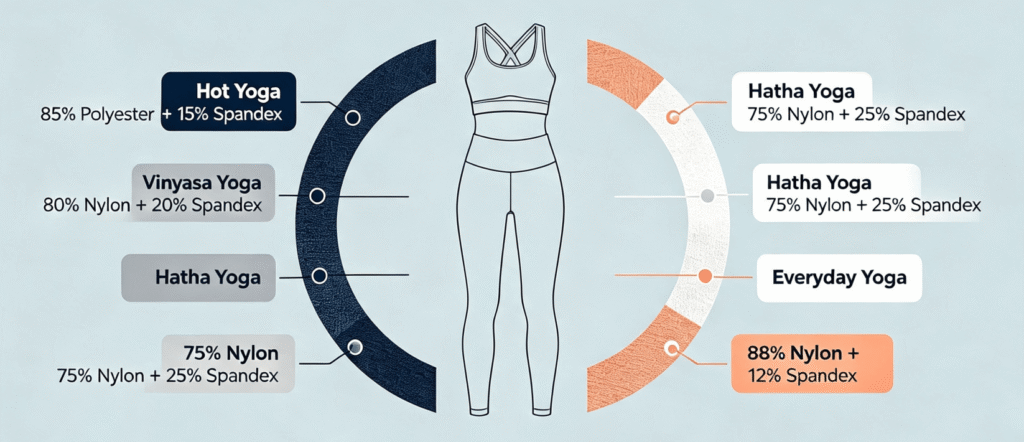
| Hot Yoga / Bikram | 85% Polyester + 15% Spandex | Maximizes moisture-wicking and breathability. Spandex adds needed flexibility. |
| Vinyasa / Power Yoga | 80% Nylon + 20% Spandex | Balances durability with stretch. Nylon provides longevity, spandex ensures freedom of movement. |
| Hatha / Restorative | 75% Nylon + 25% Spandex | Prioritizes softness and comfort while maintaining shape. Higher spandex for a “second skin” feel. |
| Everyday / Lifestyle Yoga Wear | 88% Nylon + 12% Spandex | A balanced blend offering durability, moderate stretch, and a smooth finish—ideal for versatile use. |
For reference, brands like Lululemon use nylon-spandex blends in their core leggings line, while polyester-dominant fabrics are more common in brands targeting hot yoga practitioners.
Key Considerations When Choosing Your Blend
1. Understand Your End Customer
- Are they practicing hot yoga 5x a week? → Polyester-dominant blend
- Do they value durability and multiple-wear? → Nylon-dominant blend
- Is this a premium, comfort-focused line? → Higher spandex content
2. Quality Matters — Not All Fabrics Are Equal
A low-quality nylon from a budget mill will not perform like a premium nylon from a trusted supplier. The fineness of the fibers, the construction of the yarn, and the finishing treatments all affect the final product’s feel and durability.
3. Request Testing Reports
When evaluating suppliers, always ask for:
- Fabric weight (gsm — grams per square meter)
- Tensile strength and tear resistance
- Color fastness (especially after washing)
- Shrinkage and pilling performance
Final Word
Choosing between nylon vs polyester vs spandex for yoga wear options depends on your brand’s priorities
Fabric selection is one of the most strategic decisions you’ll make for your yoga wear brand. Nylon offers unmatched durability. Polyester excels at moisture management. Spandex delivers the stretch that makes yoga wear comfortable.
The right choice depends on your target practice, your price point, and the experience you want your customers to have. Most importantly, working with a supplier who understands these nuances—and can provide transparent testing data—will set your brand up for long-term success.
Ready to source high-quality yoga wear fabrics for your brand? We specialize in custom OEM/ODM solutions with fabric expertise built into our process. Contact us to discuss your requirements →