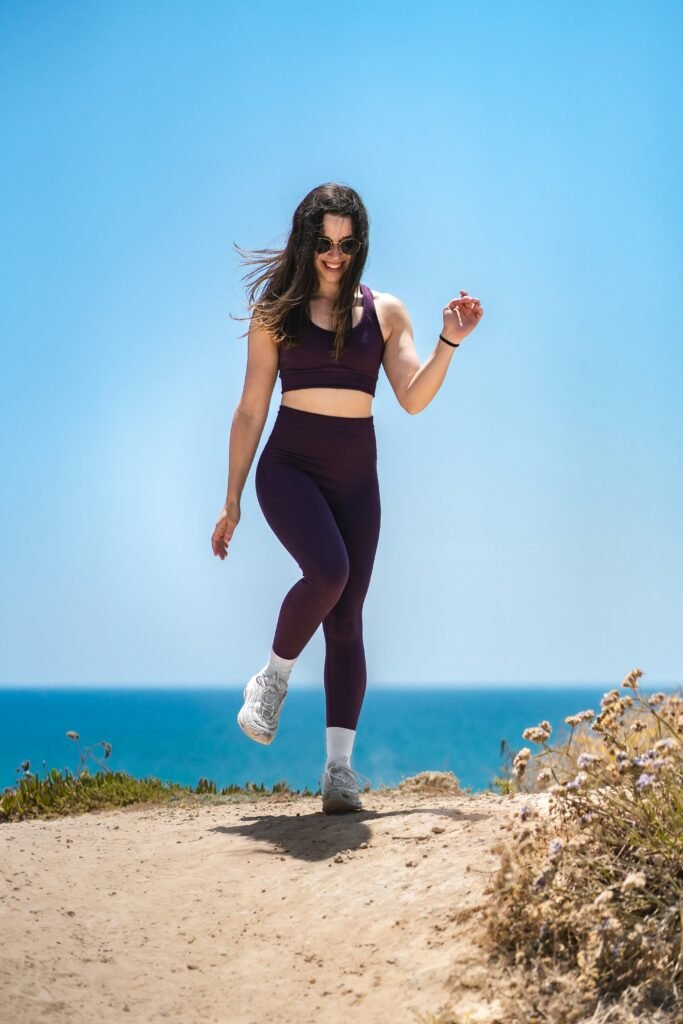
Finding the right manufacturer for custom yoga leggings is the single most critical milestone for any emerging activewear brand or expanding athleisure label. High-performance leggings are the cornerstone of modern athletic apparel, demanding an uncompromising balance between 4-way stretch elasticity, breathability, and 100% squat-proof opacity.
However, navigating overseas apparel manufacturing—from selecting high-grade nylon-spandex fabrics and precision flatlock stitching to managing Minimum Order Quantities (MOQs)—can be daunting for founders and product managers. In this comprehensive guide, we explore the 5 essential steps to successfully sourcing custom yoga leggings with reliable OEM/ODM partners.
1. Choosing Performance Fabrics for Custom Yoga Leggings
The foundation of premium custom yoga leggings lies entirely within the textile engineering. Modern consumers demand leggings that feel like a second skin (“naked sensation”) while delivering compressive support and sweat-wicking performance.
When sourcing custom yoga leggings, activewear brands typically choose among three primary fabric categories:
| Fabric Composition | Weight (GSM) | Performance Benefits | Ideal Application |
|---|---|---|---|
| Nylon 6.6 + Spandex (75/25 or 80/20) | 220 – 260 GSM | Ultra-soft buttery hand-feel, supreme 4-way stretch, excellent shape recovery, anti-pilling | Studio Yoga, Pilates, Low-to-Medium Impact Athleisure |
| Performance Polyester + Spandex (85/15) | 240 – 280 GSM | High tensile strength, rapid moisture-wicking, vibrant sublimation printing durability | HIIT, Cross-training, High-Sweat Running Wear |
| GRS-Certified Recycled Polyamide | 230 – 270 GSM | Eco-friendly circular economy material, premium matte aesthetic, quick-dry technology | Sustainable Activewear Lines, Eco Luxury Brands |
To ensure consumer safety and high international standards, always verify that your supplier’s textile mills adhere to environmental and chemical testing standards such as OEKO-TEX Standard 100 and the Global Recycled Standard (GRS).
Factory Tip: Always request a physical fabric swatch booklet before approving bulk knitting. Test fabric density under bright studio lighting to guarantee 100% squat-proof opacity across all extended sizing.
2. Key Construction Standards: Flatlock Stitching and Ergonomics
Activewear garments undergo extreme repetitive stress during workouts. Inferior stitching leads to seam abrasion, chafing, and premature blowout.
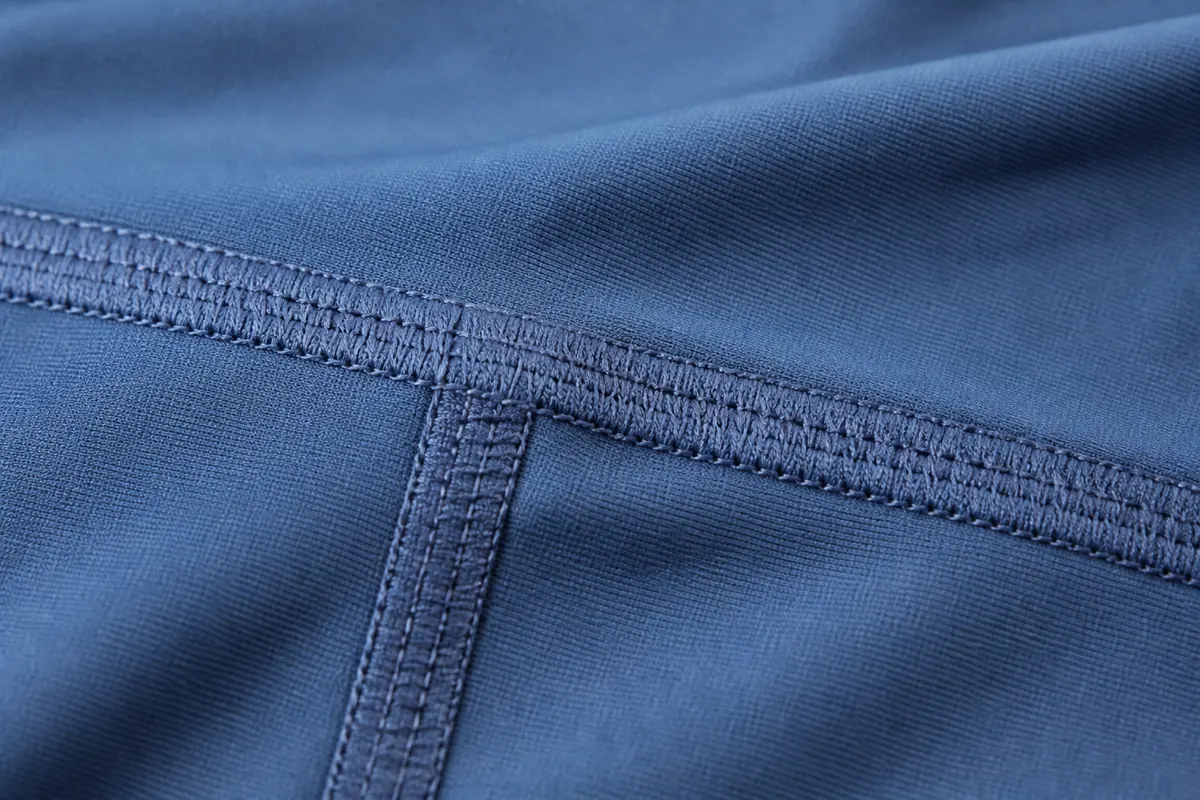
Flatlock Stitching for Custom Yoga Leggings Durability
Unlike standard overlock seams that leave bulky ridges on the inside of the garment, 4-needle 6-thread flatlock stitching interlocks the cut fabric edges perfectly flush. This eliminates friction against the skin during deep stretches and creates an elevated, professional retail finish.
Gusset and Ergonomic High-Rise Waistband Engineering
Two essential pattern elements separate amateur leggings from professional activewear:
- Diamond or Triangle Crotch Gusset: Relieves junction stress at the central four-way intersection, preventing seam tearing and eliminating unsightly camel-toe issues.
- High-Rise Bonded or Folded Waistband: Incorporates internal light elastic stabilization to ensure the waistband stays firmly anchored during bending and squatting without rolling down.
3. Building a Production-Ready Tech Pack for Custom Yoga Leggings
A detailed Technical Package (Tech Pack) is your master blueprint. It bridges the gap between your brand’s creative vision and the factory’s production line, minimizing sample iteration cycles.
Your tech pack for custom yoga leggings should incorporate:
- Technical Flat Drawings: 2D vector illustrations showing front, rear, and side seam profiles with stitch callouts.
- Measurement Grading Chart: Comprehensive points of measure (POM) across the full size curve (XS to 3XL), including waistband width, front/back rise, thigh, knee, and leg opening inseam.
- Bill of Materials (BOM): Exact specifications for shell fabric GSM, thread count, custom woven labels, and silicone grip transfers.
- Branding & Packaging Specs: Placement coordinates for reflective heat-transfer logos, care labels, and eco-friendly polybag packaging.
(If you don’t have a technical designer, you can collaborate with an experienced custom activewear manufacturer that provides full tech pack conversion from conceptual sketches.)
4. Navigating MOQs: Low MOQ Sourcing vs. Bulk OEM Production
Balancing production volume with cash flow management is vital when manufacturing custom yoga leggings:
- Agile Low-MOQ Manufacturing (50–100 pcs/style): Ideal for startup brands testing capsule drops or influencer collaborations. Manufacturers utilize in-stock premium fabrics and rapid on-demand branding (silicone heat press and custom labels) to get products to market within 7–14 days.
- Full-Scale Custom Bulk OEM (300–500+ pcs/style): Enables bespoke Pantone color dyeing, custom jacquard waistband knitting, specialized laser-cut ventilation, and optimized unit pricing for established collections.
For more insights on choosing the best textiles for workout apparel, check out our guide on is polyester good for running and athletic wear.
5. Quality Control and AQL 2.5 Standards for Activewear Brands
Before releasing your collection for global dispatch, your manufacturing partner should enforce a multi-stage Quality Assurance protocol adhering to international AQL 2.5 standards:
- Elastic Elongation & Recovery: Testing seams under continuous 200% tension to verify zero stitch cracking.
- Colorfastness to Washing & Perspiration: ISO Grade 4+ fastness testing to ensure bold colors and deep blacks do not bleed.
- Dimensional Stability & Shrinkage: Maintaining garment shrinkage below 3% after commercial laundry cycles.
Frequently Asked Questions About Sourcing Custom Yoga Leggings
What is the best fabric composition for custom yoga leggings?
The industry gold standard for buttery-soft studio yoga leggings is a 75/25 or 80/20 Nylon-Spandex blend with a weight between 220 GSM and 260 GSM. It delivers the optimal combination of 4-way stretch recovery, breathable moisture control, and opacity.
What is the typical MOQ for custom yoga leggings manufacturing?
Traditional OEM factories often require 300 to 500 pieces per style. However, agile manufacturers like Jiali Performance offer low-MOQ programs starting from 50 to 100 pieces per colorway using premium in-stock fabrics, allowing indie brands to launch risk-free.
How can brands prevent sheer or see-through issues during production?
Preventing sheer fabric requires specifying high-gauge circular knitting (such as 28-gauge or 32-gauge) and an adequate fabric weight (minimum 220+ GSM). Always conduct a “white stretch test” and direct lighting inspection on pre-production samples.
Launch Your Custom Yoga Leggings Collection with Jiali Performance
Whether you are building a new activewear startup or expanding your existing sportswear line, partnering with the right manufacturing expert makes all the difference.
Explore our complete range of Custom Yoga Wear Manufacturing Solutions or Request a Free Quote & Fabric Swatch Kit to start sampling your custom yoga leggings today.