Apparel Sourcing & Performance Fabric Guide
👤 Written by Julie · Factory Production Lead | 🏭 Jiali Performance OEM/ODM | ⏱️ 6–8 Min Read
Quick Answer (TL;DR for Brand Founders & Product Sourcing)
When choosing between nylon vs polyester for running shirts:
- Choose Polyester for lightweight marathon singlets, ultra-breathable race shirts, and all-over colorful team graphics (digital sublimation). It absorbs less moisture (<0.4%), dries faster, and is more cost-effective.
- Choose Nylon (Polyamide) for premium gym-to-trail tees, buttery-soft handfeel, superior anti-chafing against the skin, and high mechanical abrasion resistance.
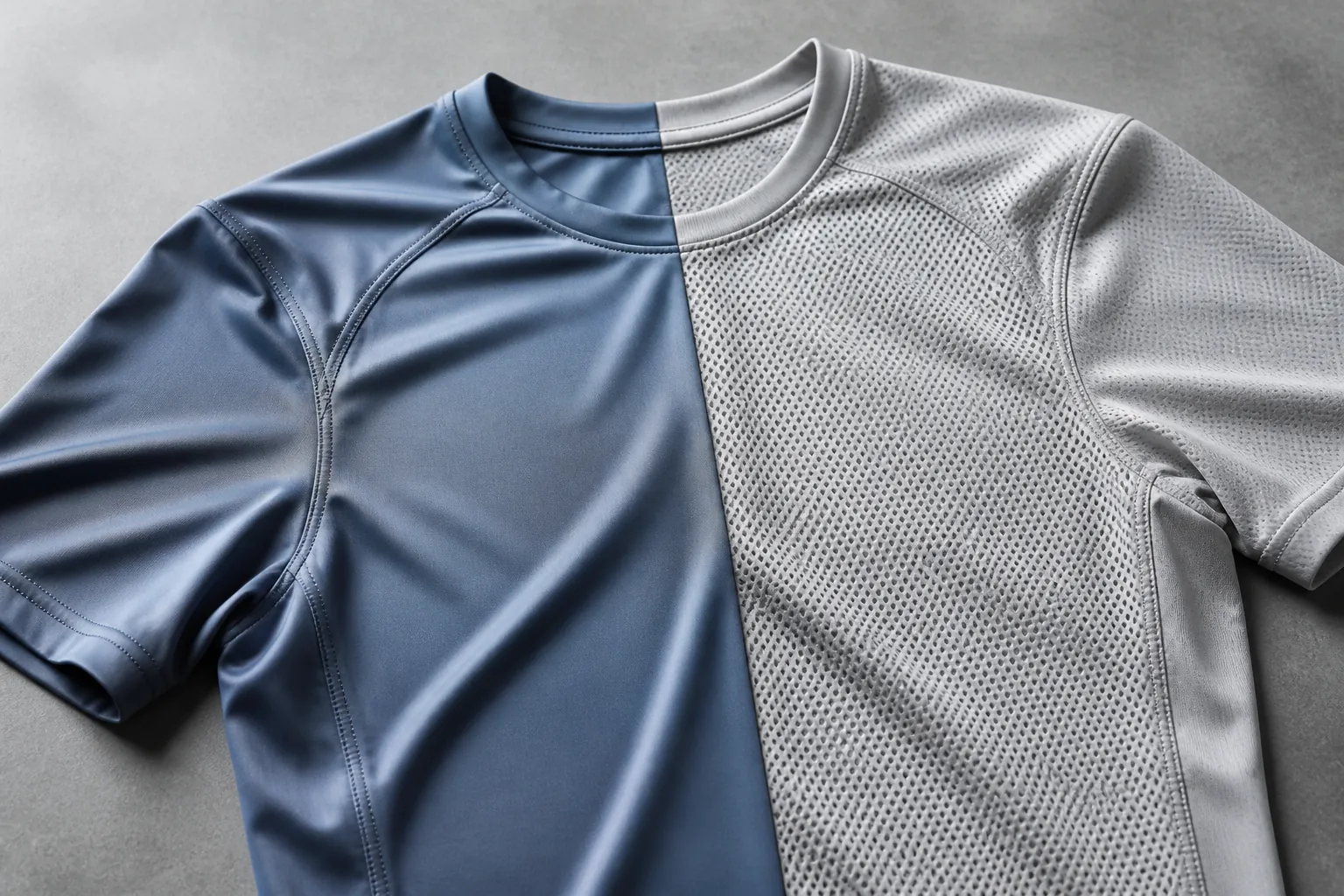
- Factory Pro Tip: Top-tier running brands frequently use a hybrid approach — a micro-poly honeycomb mesh body combined with high-stretch nylon-spandex side panels and 4-needle 6-thread flatlock stitching.
For athletic apparel startups, running club directors, and private label founders, selecting the best fabric for running shirts is the single most critical decision in your product development cycle.
A runner’s shirt is subject to intense friction, heavy sweat accumulation, UV radiation, and continuous washing. Choosing the wrong textile results in heavy, sweat-soaked shirts, severe skin chafing during 10K/marathon runs, or permanent odor buildup — all of which damage your brand’s reputation.
In this technical manufacturing guide, we break down the molecular differences, performance metrics, printing capabilities, and cost dynamics of nylon vs polyester for running shirts direct from the factory floor.
1. Quick Performance Breakdown: Nylon vs Polyester
| Performance Attribute | 100% Micro-Polyester | 100% Technical Nylon (Polyamide) | Winner for Running Shirts |
|---|---|---|---|
| Moisture Regain Rate | 0.4% (Virtually hydrophobic) | 4.0% – 4.5% (Slight moisture hold) | 🏆 Polyester (Faster drying) |
| Handfeel & Skin Softness | Crisp to soft (depends on yarn micro-denier) | Buttery-soft, cool-touch, silk-like | 🏆 Nylon (Superior comfort) |
| Abrasion Resistance | Moderate to High | Exceptional (3-4x higher than Poly) | 🏆 Nylon (Anti-pilling & hydration pack friendly) |
| Skin Chafing Prevention | Good (requires flatlock seams & soft knit) | Outstanding (ultra-smooth fiber surface) | 🏆 Nylon (Friction-free) |
| Sublimation Printability | 100% Full-Bleed 3D Sublimation compatible | Limited (requires specialized acid dyes or heat transfers) | 🏆 Polyester (Unmatched design flexibility) |
| Odor Resistance | Tends to trap bacterial lipids (needs anti-odor treatment) | Naturally less prone to permanent synthetic stink | 🏆 Nylon (Better odor baseline) |
| Raw Material Cost | Baseline Standard ($) | +20% to +35% higher ($$) | 🏆 Polyester (Higher gross margin) |
2. Deep-Dive: Moisture Wicking & Breathability
When evaluating polyester running shirts against nylon running shirts, understanding capillary action vs moisture absorption is vital:
How Polyester Wicks Sweat
Polyester fibers have a near-zero moisture absorption rate (under 0.4%). Instead of taking moisture into the fiber core, specialized micro-polyester filaments with engineered cross-sections (such as Coolmax-style cloverleaf or cruciform shapes) pull sweat along the fiber exterior to the garment surface.
- Why it matters for marathoners: Even in 90% humidity or torrential rain, a 135 GSM micro-poly running singlet will not gain water weight or sag.
How Nylon Handles Moisture
Nylon has a natural moisture regain of 4.0% to 4.5%. This means nylon absorbs a tiny amount of sweat into the polymer matrix before moving excess moisture outwards.
- Sensory cooling effect: Because of this slight moisture retention and nylon’s higher thermal conductivity, nylon shirts provide an immediate cool-to-the-touch sensation, making them popular for spring and summer training tees.
3. Anti-Chafing & Skin Comfort: The 30,000-Stride Test
During a standard 10-kilometer race or a 42-kilometer marathon, an athlete’s arms oscillate back and forth over 30,000 times against the side torso and chest.
Friction Severity = (Fiber Roughness) × (Seam Profile) × (Sweat-Salt Crystallization)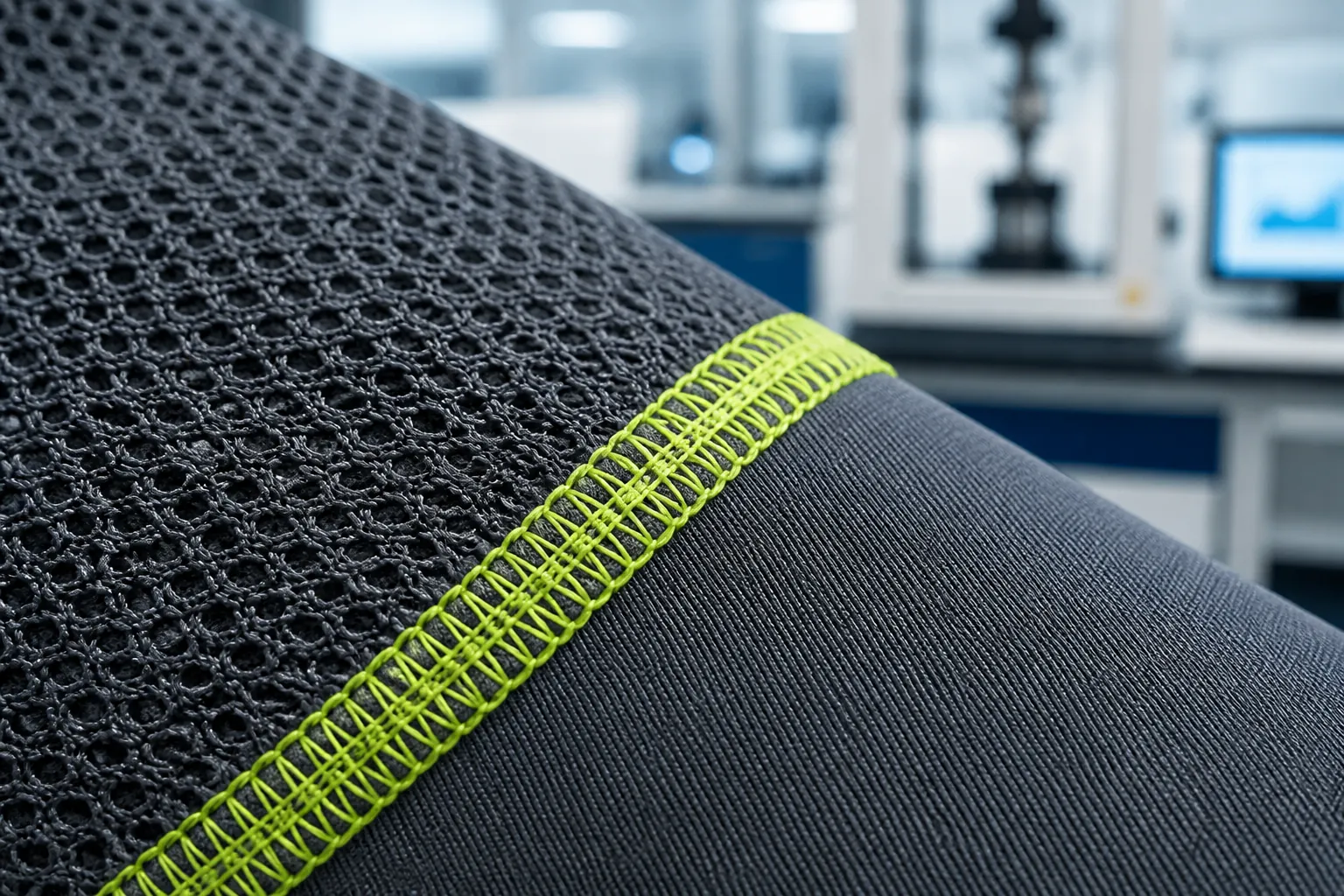
- Nylon’s Smooth Molecular Surface: Nylon fibers are inherently rounder and smoother at the microscopic level. If your brand targets ultra-sensitive skin or trail runners who wear hydration vests, nylon substantially reduces nipple chafing and underarm friction.
- The Seam Craft Multiplier: Even the finest fabric will chafe if paired with bulky overlock seams. At Jiali Performance, all performance running wear is assembled using industrial 4-needle 6-thread flatlock stitching lines, creating a completely flush, zero-friction seam profile.
🔗 Related Technical Guide: Read our in-depth comparison on Flatlock Stitching vs Overlock: Why Seam Craft Matters for Custom Running Wear.
4. Custom Branding & Printing: Sublimation vs Heat Transfer
If your brand strategy relies heavily on all-over graphic prints, race sponsor logos, or bold color gradients, fabric choice dictates your printing technology:
1. Polyester + Digital Sublimation Printing (The Industry Gold Standard)
- The Process: Italian disperse inks turn into gas under 200°C heat and permanently bond into the polyester polymer structure.
- The Advantage: 100% Breathable & Zero-Handfeel. The ink does not block fabric micro-pores, will never peel or crack, and withstands 100+ commercial wash cycles.
- Best Use: Custom team race vests, marathon event singlets, and club apparel. Explore our Custom Sublimation Team Running Singlet for real factory examples.
2. Nylon + Custom Silicone Heat Transfers & Jacquard
- The Process: Because standard sublimation dyes do not bind cleanly to nylon without bleeding, nylon running shirts are typically dyed in solid Pantone colorways, then branded using 3D matte silicone transfers, reflective 3M Scotchlite logos, or jacquard knitted patterns.
- Best Use: Minimalist luxury activewear, premium training tees, and boutique gym collections.
5. Odor Retention: The Synthetic “Permastink” Factor
A common customer complaint with synthetic athletic apparel is the “gym smell” that lingers even after washing.
- Why it happens: Polyester is naturally oleophilic (oil-attracting). It binds with the sebum and fatty acids in human sweat, providing a breeding ground for Micrococcus bacteria.
- Nylon’s Advantage: Nylon is less oleophilic and releases body oils more readily in standard cold-water wash cycles.
- Our Factory Solution: Whether you choose poly or nylon, we treat our performance textiles with certified Silver-Ion Antimicrobial Finishes (OEKO-TEX Standard 100 certified) to inhibit 99.9% of odor-causing bacteria for 50+ washes.
6. Sourcing & Cost Comparison for Brand Owners
| Sourcing Parameter | Micro-Polyester Running Shirts | Technical Nylon Running Shirts |
|---|---|---|
| Typical Fabric Weight (GSM) | 120 – 145 GSM (Airflow Mesh / Honeycomb) | 140 – 180 GSM (Silky Interlock / Rib Knit) |
| Target Product Category | Marathon Singlets, Race Tees, Event Shirts | Luxury Training Tops, Trail Tees, Long Sleeves |
| FOB Factory Unit Cost (50-100 Pcs) | $5.80 – $7.50 / pc (Including full sublimation) | $7.50 – $9.80 / pc (Solid dyed + silicone branding) |
| Target Retail Price Point | $35 – $55 USD | $48 – $78 USD |
| Minimum Order Quantity (MOQ) | 50 Pcs / Style (Mix sizes XS–3XL) | 50 Pcs / Style (Stock colors) |
| Sampling Turnaround | 3 – 5 Days | 5 – 7 Days |
7. Factory Verdict: Which Fabric Should You Choose?
Choose 100% Micro-Poly Honeycomb Mesh if:
- You are producing dedicated marathon singlets, race day kits, or warm-weather running tops.
- Your designs feature vibrant all-over graphics, multi-color team crests, or complex sponsor logos.
- You need the lowest possible wet weight and the highest moisture evaporation speed.
Choose Nylon-Spandex Technical Knit if:
- You are building a high-end, luxury activewear or Athleisure brand competing with Lululemon or Tracksmith.
- Skin touch, drape, and silky anti-chafing performance are your primary selling propositions.
- You want extreme abrasion resistance against running backpacks and waist belts.
Explore our full range of factory-direct Custom Running Wear Manufacturing Capabilities or view our Agile 50 Pcs Low MOQ OEM Services.
Frequently Asked Questions (B2B Sourcing FAQ)
Q1: Can we blend Nylon and Polyester together in a running shirt?
Yes. Many advanced athletic knits use bi-component yarns or dual-face knitting (e.g., a nylon inner layer for soft skin contact paired with a polyester outer mesh for rapid moisture dispersal). We can customize yarn blends starting from 100 pieces per colorway.
Q2: Is recycled polyester (rPET) good for running shirts?
Absolutely. Our GRS-certified (Global Recycled Standard) recycled micro-poly offers identical tensile strength, wicking rates, and sublimation clarity to virgin polyester, allowing eco-conscious brands to market 100% sustainable performance gear.
Q3: What is the ideal GSM fabric weight for marathon singlets?
For elite competition singlets, we recommend 130 to 140 GSM. Anything below 120 GSM risks being semi-transparent when wet, while fabrics above 160 GSM feel too heavy during distance running.
Q4: How does Jiali Performance support small brands with 50 pcs MOQ?
We keep over 200+ rolls of tested technical performance fabrics in stock (including UPF 50+ Poly, Micro-Honeycomb Mesh, and Nylon-Spandex Interlock) in classic and trending shades. This allows us to cut, sew, print, and package small custom orders without waiting for large fabric mill dye lots.
READY TO LAUNCH YOUR CUSTOM RUNNING SHIRT LINE?
Get factory-direct custom running shirts with flexible 50 Pcs MOQ, rapid 3–5 day prototyping, and 100% AQL 2.5 quality control.
Request a Free Quote & Physical Fabric Swatch Kit →
✓ 15-Year OEM/ODM Factory • ✓ 50 Pcs Low MOQ • ✓ Fast 2h Response