Sourcing waterproof fishing jackets for your brand isn’t just about finding a supplier who can sew a shell together. The fishing apparel market has become increasingly competitive, and the difference between a jacket that sells out and one that gathers dust on the shelf often comes down to a few critical factors that many brands overlook during the sourcing process.
Here are the five factors that matter most when evaluating potential suppliers and products.
1. Waterproof Rating: Beyond the Numbers
Most suppliers will quote a waterproof rating — typically between 5,000mm and 20,000mm. But here’s what they don’t always tell you.
| Rating Range | What It Actually Means | Best For |
| 3,000–5,000mm | Light rain resistance, short exposure | Casual use, light drizzle |
| 5,000–10,000mm | Moderate rain protection, 1-2 hours | Regular fishing trips, light rain conditions |
| 10,000–20,000mm | Heavy rain protection, extended exposure | All-day fishing, unpredictable weather |
| 20,000mm+ | Extreme conditions | Offshore fishing, tropical downpours |
What to ask your supplier:
- “What testing standard do you use — ISO 811 or AATCC 35?”
- “Is the rating tested on the fabric alone or on the finished garment?”
- “What’s the rating after 10 washes?”
The last question is crucial. A jacket that starts at 15,000mm but drops to 3,000mm after five washes isn’t delivering value to your customers.
2. Seam Sealing: The Hidden Weak Point
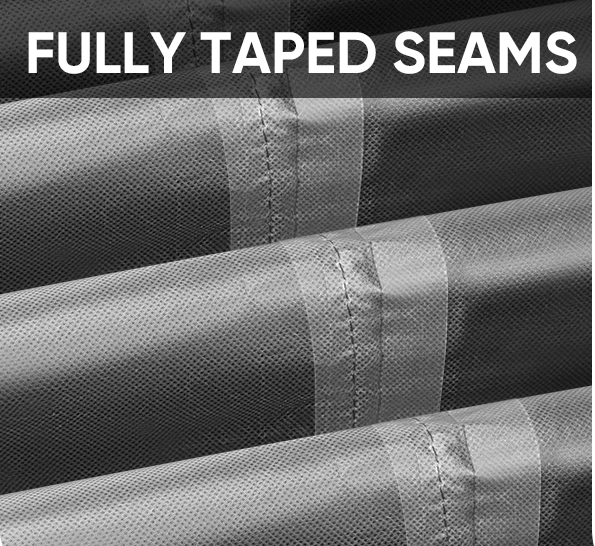
The fabric can be 20,000mm waterproof, but if the seams aren’t properly sealed, water will find its way through the needle holes. This is one of the most common quality issues in mid-range fishing jackets.
Three levels of seam sealing to look for:
| Level | Description | Quality Indicator |
| Taped seams (full) | All seams covered with waterproof tape | ✅ Best — required for true waterproofing |
| Taped seams (critical areas only) | Only shoulders and hood are taped | ⚠️ Fair — water may leak through other seams |
| No taping | Seams left untreated | ❌ Unacceptable for any “waterproof” claim |
What to inspect on a sample:
- Turn the jacket inside out
- Check that tape is smooth and flat, not bubbling or peeling
- Pay special attention to armhole and collar seams — these areas experience the most movement and stress
- The tape should extend at least 1-2cm beyond each seam intersection
Red flag: If a supplier doesn’t know what “seam taping” means, or says it’s “not necessary for waterproof jackets,” move on.
3. Fabric Weight and Packability
Fishing jackets are often carried as backups. Your end customers want a jacket that disappears into a backpack or boat compartment until it’s needed. That means lightweight and compressible matter as much as waterproofing.
Key specification to ask for:
- Fabric weight: Look for 1.5oz to 3oz per square yard (50–100g/m²) for true lightweight performance
- Packed size: Ask for a photo of the jacket stuffed into its own pocket or a compression sack. A jacket that doesn’t compress to roughly the size of a water bottle has limited appeal
Why this matters for your brand:
A lighter jacket doesn’t just reduce shipping costs — it also makes your product easier to sell. Fishing enthusiasts who travel to destinations like Florida or Costa Rica prioritize gear that won’t eat up luggage space.
4. Breathability and Ventilation Design
This is the factor most brands discover too late. A jacket that keeps water out but traps sweat in creates the “boil-in-the-bag” effect — a miserable experience for any angler casting under the sun
Two types of breathability to evaluate:
A. Fabric breathability (MVTR — Moisture Vapor Transmission Rate)
- Minimum for fishing: 5,000 g/m²/24h
- For active fishing (constant casting, walking): 10,000 g/m²/24h or higher
- Bottom line: Don’t accept a supplier who can’t provide MVTR test data
B. Mechanical ventilation (design features)
| Feature | Why It Matters |
| Pit zips (underarm zippers) | Most effective way to dump heat; look for 2-way zippers for adjustable airflow |
| Mesh-lined back vents | Allow heat to escape while blocking rain entry |
| Adjustable cuffs | Let users control airflow at wrists |
| Two-way front zipper | Allows venting from the bottom while keeping the chest area sealed |

What to ask your supplier:
“Can you provide MVTR test reports?”
“Show me the ventilation features on your existing designs.”
“Can you customize vent placement based on our specifications?
5. Durability Testing and Wash Performance
Waterproof jackets aren’t disposable. Your customers expect them to last multiple seasons. But many brands only test the jacket when it’s brand new, ignoring how it performs after weeks of use.
Three durability tests to request:
| Test | What It Measures | Why It Matters |
|---|---|---|
| Washing cycle test | Waterproof rating after 10, 20, 50 washes | Simulates real-world lifespan |
| Abrasion resistance (Martindale test) | Fabric resistance to rubbing and wear | Fishing jackets rub against rods, boat seats, and tackle boxes |
| Tear strength (Tongue tear test) | How easily the fabric tears after being punctured | Critical for bushwhacking or snagging on hooks |
A recommended benchmark:
- A well-made fishing jacket should retain at least 70% of its original waterproof rating after 20 washes
- Abrasion resistance of 20,000+ cycles is a good baseline for fishing applications
Red flag: If a supplier only tests “new product samples” and can’t tell you how the jacket performs after washing, they’re not thinking about your customer’s long-term satisfaction.
Quick Decision Checklist for Sourcing Waterproof Fishing Jackets
Use this checklist when evaluating samples or comparing quotes from different suppliers:
| Factor | What to Verify | Pass/Fail |
|---|---|---|
| Waterproof rating | Ask for test standard (ISO 811) and rating after 10 washes | ☐ |
| Seam sealing | Inspect sample inside-out — full taping, smooth finish | ☐ |
| Fabric weight | Request spec sheet — target ≤100g/m² for lightweight | ☐ |
| Breathability | Request MVTR data — target ≥5,000g/m²/24h | ☐ |
| Ventilation | Confirm pit zips or back vents as standard | ☐ |
| Wash durability | Request wash-cycle test results | ☐ |
Final Word
Sourcing a great waterproof fishing jacket comes down to looking beyond the supplier’s spec sheet. The right product for your brand is one that balances waterproof performance with real-world usability — breathability, packability, and durability over time.
The brands that win in fishing apparel aren’t the ones with the highest numbers on their tags. They’re the ones that truly understand how anglers use their gear, and they build their sourcing decisions around that understanding.
Need help evaluating samples or comparing quotes from suppliers? Reach out — we work with fishing brands to source jackets that actually perform on the water.